
COLORING A PAINT, INK OR PLASTIC
IT ALL STARTS WITH WHITE
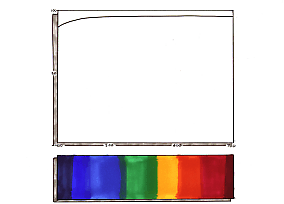
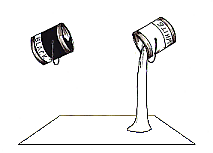
If we begin with a transparent material and we want to make that material opaque, we need to scatter all wavelengths of light. The pigment color that does this would create a white material. Most commonly we use titanium dioxide (TiO2) as the white pigment. White is used in the basic formulation of most paints and plastics and some printing inks. It serves as the basic media to be colored. The white of the base can create problems in achieving high chroma (clean and bright) colors. Then you must take some of the white out of the formula, which lessens your opacity and increases transparency of the material. This hurts hiding and coverage, but does allow you to get the high chroma color match. In printing, using transparent inks such as litho printing, the white of the substrate becomes the white of the color. In textile dying, it is the white of the fibers.
|
|
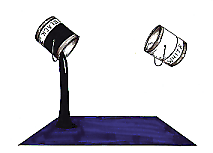
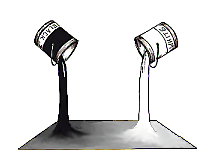
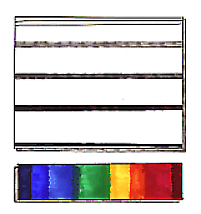
If we want black or gray, we need a pigment that absorbs all wavelengths of light such as carbon black. We can create many levels of gray by making various mixtures of white and black. In creating a color computer matching databases for paints, some plastics and some inks, these are the first samples that we make. The color samples of white, several grays, and black become the key information that the color computer uses to predict color mixtures.
 |
 |
 |
 |
||
| ...... | ||
| <IT ALL STARTS WITH WHITE > <WHITE AND BLACK MIXTURES> | ||
| ...... | ||
| Click Here To Continue. | ||
| ...... | ||
| Copyright © 1998,2009 ColorTec Associates, Inc. All rights reserved. All other manufacturers’ trademarks acknowledged. | ||
| ...... | ||