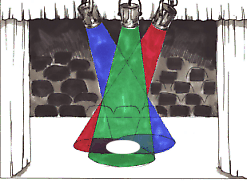
| There are two ways of mixing colors. You can mix light in an additive way or subtractive way. | |
|
When we mix light by adding all monochromatic colors (red, orange, yellow, green, blue, violet) the mixture of all colors is white light. If we take all of the light away, we have black. This type of color mixing is important in stage lighting, color monitors, color television and building, display and room lighting. Change the color balance of the light and you can create dramatic color changes. |
| SUBTRACTIVE COLOR MIXING | |
| - Paints, printed materials, plastics, dyed textiles, and similar materials all achieve color by absorbing and scattering light. | |
| - Each color in subtractive color differentially absorbs some wavelengths of light and allows others to scatter and REFLECT back to the observer. The color that you see is the light that is not absorbed and is scattered. | 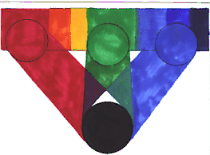 |
| - In subtractive color mixing, the perfect mixture of all color would absorb all of the light and would look black. | |
| - White is achieved by reflecting all wavelengths of light back to the observer. | |
| ..... | |
| <COLOR MIXING> | |
| ..... | |
| Click Here To Continue. | |
| ..... | |
| Copyright © 199820099 ColorTec Associates, Inc. All rights reserved. All other manufacturers’ trademarks acknowledged. | |